


By AfriWave
The United States and Egypt have signed a $125 million agreement aimed at growing Egypt’s private sector and opening new doors for American companies. It is the first agreement of its kind between the two countries.
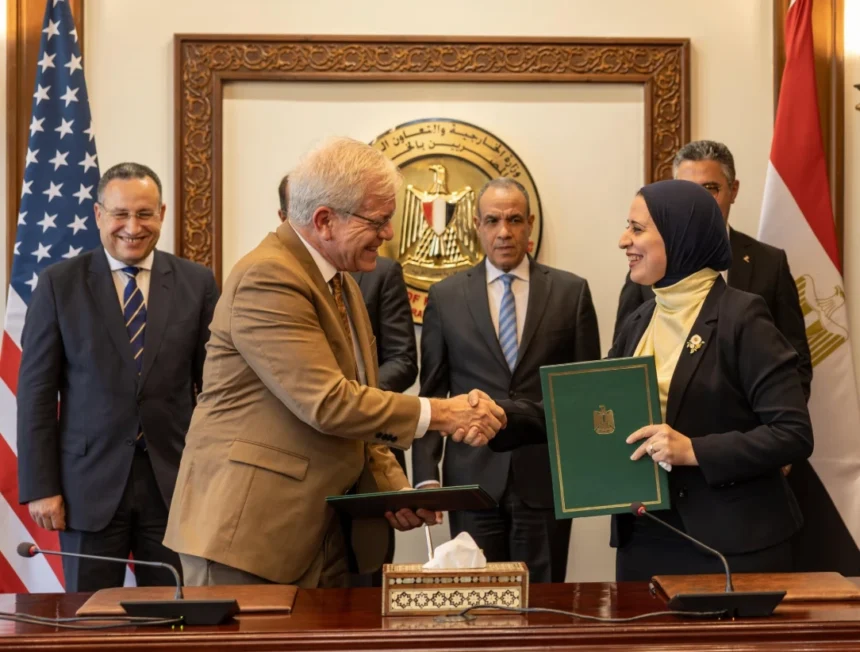
The Strategic Objective Agreement for Advancing Mutual Prosperity was signed on Wednesday, November 4, at Egypt’s Ministry of Foreign Affairs in the New Administrative Capital. Egypt’s Deputy Foreign Minister for International Cooperation, Samar El-Ahdal, and the US Chargé d’Affaires, Robert Silverman, signed it. Foreign Minister Badr Abdelatty attended, along with the ministers of finance, supply and internal trade, and higher education.
What the money is for
According to the US Embassy in Cairo, the funding will support agriculture and food security, basic and higher education, health, water security and innovation, workforce development, and what the embassy calls “Super Intelligence”, a reference to artificial intelligence. Egypt’s Foreign Ministry spokesman, Nader Zaki, said the deal also aims to make the country’s water, energy and infrastructure systems more efficient, modernise public services and create jobs.
The embassy said the two governments will work to “leverage Egypt’s strategic economic advantages”, including its location, large workforce and growing markets. It said the agreement is meant to promote Egyptian “self-reliance” and ensure that US foreign assistance delivers “maximum impact, efficiency, and accountability.” It did not say how long the agreement will run or how the money will be spent.
“This agreement will generate significant economic growth in Egypt,” Silverman said. El-Ahdal said she was confident that “our relations will continue to develop and prosper.”
A new model of US aid
The deal reflects a wider change in how Washington gives aid. In 2025, the Trump administration dismantled the US Agency for International Development and moved its remaining programmes into the State Department. Its new agreements tie aid more closely to American commercial interests. In August, the US signed a similar four-year, $354.6 million agreement with Jordan, which its embassy described as part of the “America First” foreign assistance agenda and as creating opportunities for US firms.
For Egypt, the $125 million is modest beside the roughly $1.3 billion a year it has long received in US military assistance. But it comes as trade between the two countries is rising. The Office of the US Trade Representative put two-way trade in goods and services at an estimated $16.1 billion in 2025, up nearly 29 percent from the year before, according to Arab News. US goods exports to Egypt rose 47 percent to $9.4 billion.
Why it matters for Africa
Egypt’s deal is unlikely to be the last of its kind. For governments across the continent, the message is that US aid is now more likely to arrive with a commercial dimension, linked to American companies and framed around self-reliance rather than long-term support. Whether that brings jobs and better services to ordinary Egyptians, or mainly new markets for American firms, will depend on details neither government has yet made public.