


By AfriWave
NEW YORK — The jeans in an American closet could soon carry an unusual provenance: cotton grown on a named US farm and stitched in an African factory, with both listed for the shopper to see.
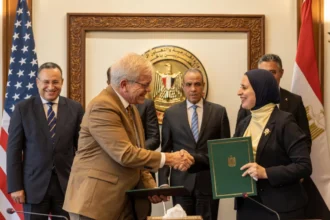
That is the pitch behind the Trans-Atlantic Cotton Partnership (TACP), launched on the sidelines of the UN General Assembly’s 81st session on September 23 by the US-Africa Trade Desk (USATD) together with the governments of Lesotho, Mauritius and Kenya.
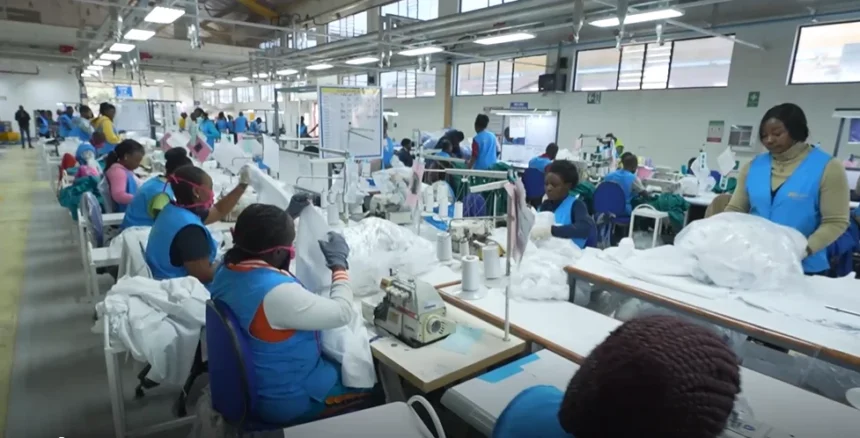
The idea is simple. US-grown cotton is shipped directly to African manufacturers, turned into finished goods, and sold back to American consumers. Each product can be traced to its originating US farm and African manufacturing facility. USATD says it will build the compliance, logistics and financing systems to make the trade routine.
“American cotton can leave the United States, be transformed through African industry and craftsmanship, and return as finished garments,” said Mauritius’s Minister of Industry, SMEs and Cooperatives, Ameer Meea.
Lesotho’s Prime Minister, Sam Matekane, said the partnership is a chance “to connect two continents through a productive industrial relationship,” and added that “we have an opportunity to build something much larger than the cotton trading arrangement.” Kenya’s Cabinet Secretary for Investments, Trade and Industry, Lee Kinyanjui, said that “developing integrated cotton, textile, and apparel value chains is essential for Africa’s industrialization and export growth.”
A pilot already ran
The launch follows a smaller test. In August 2025, USATD announced a 300-ton cotton shipment from North Carolina to Mauritius, where Firemount Textiles was the buyer, according to the group’s announcement at the time.
Why these three countries
All three depend on the US apparel market, and all three have had a rough two years.
- Lesotho has about 34,000 to 40,000 garment jobs, depending on the source, most held by women. A 2025 tariff shock cut its exports to the US 28% to $170.2 million, according to Rio Times reporting. One report notes that “buyers who left in 2025 have not come back.”
- Kenya’s apparel industry supports more than 66,000 direct jobs, mostly in export processing zones, and makes up about 70% of its US-bound exports, The Star reports.
- Mauritius shipped roughly $174 million in goods to the US in 2025, with about $70 million of that dependent on AGOA preferences.
The clock behind the announcement
TACP lands as the African Growth and Opportunity Act (AGOA), the duty-free framework these exporters rely on, has been running on short extensions. It lapsed on September 30, 2025 and stayed lapsed for four months. A one-year renewal followed in February 2026. President Trump signed a further extension to December 31, 2028 in early September, according to CalChamber and The Star.
Lesotho’s trade minister, Mokhethi Shelile, said earlier this year that a one-year extension “is not a conducive timeline for our businesses.” The US Trade Representative has also begun a “modernization” review of AGOA, so the terms after 2028 are uncertain. A cotton-to-garment supply chain takes years of investment to build.
What is missing
The announcement gives no shipment volumes, dollar figures or timeline. It also does not name the US farms, cotton exporters or African mills that would take part, or say how the traceability would work. It is a framework, and its value will depend on whether orders follow.
A second question is whether the model fits Kenya’s existing rules. AGOA’s third-country fabric provision lets Kenyan export zone firms use yarn and fabric from outside Africa, which is how much of the industry operates today. How much US cotton can compete with that supply is not yet clear.
What to watch
- The first named brand or retailer that commits to a TACP-labelled product line
- Volumes and pricing for the first commercial shipments
- Whether more African governments join
- What the AGOA review changes after 2028