


A decade of two Africas
For ten years, Africa has been building roads faster than it has been protecting rights.
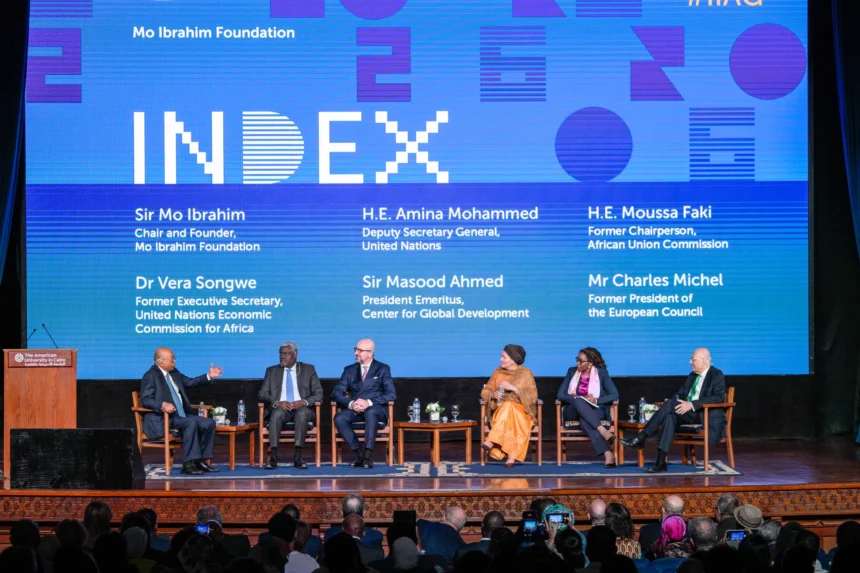
That is the stark verdict of the 2026 Ibrahim Index of African Governance (IIAG), released on Saturday, October 31, at the American University in Cairo. Comparing 2025 with 2016, the index found overall governance deteriorated in 23 of Africa’s 54 countries. Thirty improved and one stood still. But the countries that slipped hold just over half of all Africans.
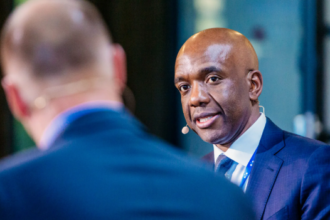
Mo Ibrahim, the 80-year-old Sudanese-British telecoms billionaire whose foundation publishes the index, put the trend bluntly in an interview reported by Billionaires.Africa. African leaders, he argues, are watching authoritarian figures gain ground across the world and drawing their own conclusions. In his words, “we can see this phenomenon of the rise of strongmen everywhere.”
The question he says many presidents are now asking themselves is simple: if others can do it, why not me?
Growth without freedom
On paper, the continent is inching forward. Africa’s average governance score reached 50.1 out of 100 in 2025, up from 49.3 in 2016. Look closer, and every bit of that progress comes from just two of the index’s four pillars.
| IIAG category | 2016 | 2025 | Change |
|---|---|---|---|
| Foundations for Economic Opportunity | 47.4 | 51.1 | +3.7 |
| Human Development | 50.7 | 53.2 | +2.5 |
| Participation, Rights & Inclusion | 49.5 | 48.5 | −1.0 |
| Security & Rule of Law | 49.5 | 47.8 | −1.7 |
| Overall governance | 49.3 | 50.1 | +0.8 |
Scores out of 100, African average across 54 countries. 2016 figures derived from reported 2025 scores and ten-year changes.
The economic gains are real. Infrastructure improved in 52 countries — every nation except Nigeria and The Gambia. Health, education and social protection also moved forward.
The losses are just as real. Security and the rule of law worsened in 34 countries. Participation, rights and inclusion fell in 31. And in 25 countries, home to almost 47% of Africans, economies grew even as security and justice eroded.
In the Foundation’s official statement, Ibrahim welcomed the resilience those numbers show, but warned that “this is not a sustainable trade-off.” Economic and social gains, he argued, will not last without progress on security, the rule of law and participation.
The detail beneath the headline sharpens that warning. Infrastructure, powered by mobile connectivity, gained 7.7 points — the largest improvement of the index’s 16 sub-categories. Participation lost 5.0 points, the steepest fall. The one hopeful sign on security: its decline has slowed since 2022, with 27 countries improving.
Island leaders, coup-belt laggards
Small states with stable institutions dominate the top of the table. Seychelles ranked first with 78.6 and also posted the largest ten-year improvement of any country, up 8.3 points. Mauritius (75.0) came second.
| Rank | Top 10, 2025 |
|---|---|
| 1 | Seychelles |
| 2 | Mauritius |
| 3 | Cabo Verde |
| 4 | Botswana |
| 5 | South Africa |
| 6 | Namibia |
| 7= | Morocco |
| 7= | Senegal |
| 9 | Ghana |
| 10 | Kenya |
Morocco broke into the top ten after a 6.4-point gain, displacing Tunisia. South Africa held fifth at 66.6, but the index classifies it as a country in “increasing deterioration” — its decline is accelerating, a warning sign for one of the continent’s anchor democracies.
Even the leaders are not all climbing. Only four of the top ten — Seychelles, Morocco, Senegal and Kenya — improved over the decade. The other six scored lower in 2025 than in 2016.
At the other end, Burkina Faso fell furthest, losing 6.9 points. Nigeria, Africa’s most populous nation, came next, down 5.2 points to 44.2 and ranked 38th — the only country on the continent to decline in all four of the index’s categories. Sudan, Tunisia, Comoros, Mali, Guinea-Bissau, Niger and Guinea followed, with Mauritius and Mozambique tied in tenth.
The pattern is hard to miss. Seven of those eleven countries experienced at least one coup during the decade. Burkina Faso, which saw two coups in 2022, also recorded the continent’s sharpest collapse in security and safety, down 26.1 points — a hard rebuttal to the juntas’ promise of order in exchange for suspended democracy.
Strongmen at the ballot box
Ibrahim pointed to East Africa’s recent elections as evidence. In Tanzania, security forces stand accused of killing thousands of protesters. In Uganda, opposition leader Bobi Wine was hunted and attacked during the campaign. Ibrahim called the conduct disgraceful and said such leaders simply believe there will be no consequences.
He also turned his fire on Washington. Ibrahim criticised what he sees as a transactional U.S. foreign policy that is weakening the international order and the rule of law. He described the sudden dismantling of USAID last year as brutal — not because America is obliged to give aid, he said, but because it gave Africa no warning.
His prescription is self-reliance. Africa, he argued, must lean more on its own resources and work with any partner willing to engage — Europe, China, India or others.
Zimbabwe: rising, but not in the courts
Zimbabwe tells both of the index’s stories at once. It ranks 30th of 54, tied with Ethiopia, with a score of 48.4 out of 100 — below both the African average (50.1) and the Southern Africa average (56.1). Yet it is among 18 countries on a trajectory of “increasing improvement” — getting better, and faster, since 2021. It is also one of 20 countries that improved in both security and rule of law and economic opportunity.
But the courts are another matter. On impartiality of the judicial system, Zimbabwe is Africa’s third most deteriorated country, down 30.3 points over the decade. The report ties that fall to a 2017 constitutional amendment that gave President Emmerson Mnangagwa far greater discretion over appointing the Chief Justice, Deputy Chief Justice and Judge President of the High Court — and to a further amendment, enacted in 2021, that widened that influence.
Zimbabwe sits 33rd on rule of law and justice, below its overall rank. For a country whose 2017 transition was sold as a fresh start, the data shows governance improving around a judiciary drawn closer to the presidency.
Why the diaspora should care
For Africans abroad, these numbers are not abstractions. They are the reasons many of us left — and the conditions that shape whether we invest, return, or keep sending money home to families navigating insecurity.
The index’s central finding should sharpen the diaspora’s voice. Roads, phones and clinics matter, but they are not a substitute for courts that work and elections that count. A country that grows while its citizens lose their rights is building on sand. Diaspora remittances, investment and advocacy carry weight with governments; the IIAG gives that pressure hard evidence.
Ibrahim, for his part, rests his hope on the young. Around 60% of Africans are under 25, and he describes them as better educated and better informed than his own generation — which, he concedes, squandered opportunities.
The man who made his fortune connecting Africa by mobile phone — founding Celtel in 1998 and selling it to Kuwait’s MTC, now Zain, for $3.4 billion in 2005 — has spent two decades since then measuring how well the continent is governed. His foundation has published the index since 2007 and awards the Ibrahim Prize to former leaders who govern well and leave office on time.
This year’s data suggests the strongmen are not reading the scorecard. The question for the continent — and for those of us watching from abroad — is whether its young majority will.
Sources
- 2026 Ibrahim Index of African Governance: press release — Mo Ibrahim Foundation, Oct 31, 2026
- 2026 Ibrahim Index of African Governance: Index Report — Mo Ibrahim Foundation, Oct 2026
- Sudanese billionaire Mo Ibrahim says governance fell in 23 African countries — Billionaires.Africa, Nov 1, 2026