
AfriWave USA
  • Inform
  • Understand
  • Connect
  • Grow
  • US-Africa
  • Contact
Latest
  • US and Egypt sign $125 million deal to drive private-sector growth
  • Judge Michelle Butler: from Zimbabwe’s Kambuzuma to the Texas bench
  • The Strongman Decade: Africa’s Governance Gains Mask a Slide in Rights and Security
  • Zimbabwean Chef Serves a Taste of Southern Africa in Virginia, U.S
  • Africa’s AI Story Is Learning to Tell Its Own Stories

Inform

Journalism

Understand

Service Guide

Connect

Network

Grow

Institute

US-Africa

Flagship

Contact

Get In touch

Font ResizerAa
AfriWave USAAfriWave USA
  • Inform
  • Understand
  • Connect
  • Grow
  • US-Africa
  • Contact
Search
Have an existing account? Sign In
Follow US
© AfriWave USA News Network. By Web3 Solutions. All Rights Reserved.
Africa SpeaksConnectTechnology

US based Zimbabwean AI Pioneer James Manyika Wins Harvard’s Du Bois Medal

A University of Zimbabwe engineering graduate who now helps steer Alphabet's work in AI and science was honoured at Harvard on 8 October, with another Zimbabwean, Strive Masiyiwa, handing him the medal.

Editor
Last updated: October 19, 2026 3:18 am
Editor
Share
SHARE

By AfriWave

Contents
From Harare to Oxford to the top of techWhat Zimbabweans saidWhy it matters for the diaspora

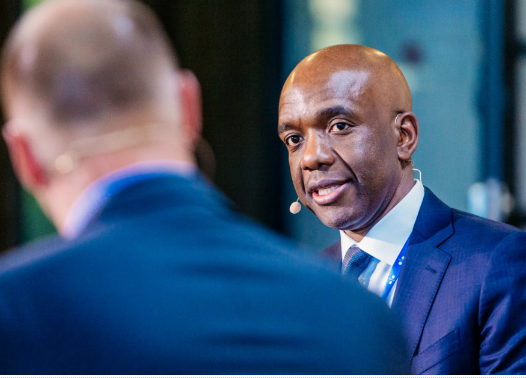
On Thursday night, 8 October, a Zimbabwean walked onto the stage at Harvard’s Sanders Theatre to present a medal to another Zimbabwean. The man receiving it was James Manyika, a senior executive at Alphabet, Google’s parent company, where he works across artificial intelligence, computing and science. The man presenting was the businessman Strive Masiyiwa, who won the same honour in 2024.

The W.E.B. Du Bois Medal is Harvard’s highest honour in African and African American studies, given for contributions to African and African American culture and the life of the mind. Manyika was one of eight medalists this year. The others were Angela Bassett, Didier Drogba, Theaster Gates, Reed Hastings, Mavis Staples, Lena Waithe and, posthumously, the attorney and civic leader Fletcher “Flash” Wiley, whose wife accepted on his behalf. More than 500 people filled the theatre, according to The Harvard Crimson.

From Harare to Oxford to the top of tech

Manyika’s route to that stage started at home. He earned a first-class engineering degree at the University of Zimbabwe, then went to Oxford as a Rhodes Scholar. Today he leads work at Alphabet that spans AI, computing and science. Harvard’s own listing calls him a “Technologist, Business Executive & Philanthropist.”

He joins a long list of past medalists. Zimbabwe’s The Herald pointed to Wole Soyinka and John Lewis. Other accounts of the honour also list Muhammad Ali, Toni Morrison, Maya Angelou and Harry Belafonte.

What Zimbabweans said

The reaction back home was warm and personal. One tribute recalled meeting Manyika in Harare, where the talk over coffee was about artificial intelligence and autonomous vehicles. Another summed up the mood in one line: “Zimbabwe has never been short of talent.”

That line deserves a second look. Talent is not the hard part. The hard part is the distance between talent and the systems that make room for it: the labs, the funding, the regulators and the classrooms. Many of AfriWave’s readers have made that crossing themselves, and many are still working out what they owe the places they left.

Why it matters for the diaspora

There is a practical point for AfriWave’s community too. The tools that will shape African classrooms, farms and businesses over the next decade are being built by people who work in AI, and a Zimbabwean now stands among them. Whether that helps the continent depends on who gets to decide what the technology is for.

What he does with that position is the real story to watch. A medal records what someone has done. It does not say what comes next.

Reader, who is the Zimbabwean, or African, whose work abroad you most want the continent to benefit from, and what would bring that work home?


Sources: The Herald, “Harvard honour highlights Zim’s influence in the world” (15 October 2026); The Harvard Crimson, 2026 Du Bois Medal recipients (9 October 2026); Harvard Hutchins Center for African and African American Research; community tributes shared on social media.


TAGGED:AfricaGoogleHavard UniversityManyikaStrive MasiyiwaUSW.E.B. Du Bois MedalZimbabwe
Share This Article
Email Copy Link Print
Previous Article From Georgia Fields to Maseru Factory Floors: A New Cotton Pact Aims to Make “Made in Africa” Start in America
Next Article Africa’s AI Story Is Learning to Tell Its Own Stories
Leave a Comment

Leave a Reply Cancel reply

Your email address will not be published. Required fields are marked *

Your Trusted Source for Accurate and Timely Updates!

Our commitment to accuracy, impartiality, and delivering breaking news as it happens has earned us the trust of a vast audience. Stay ahead with real-time updates on the latest events, trends.
FacebookLike
XFollow
InstagramFollow
LinkedInFollow
MediumFollow
QuoraFollow
- Advertisement -
Ad image

You Might Also Like

Technology

Unpacking the Nexus Between Technology and National Security

By gary
PoliticsThe Watch

The Strongman Decade: Africa’s Governance Gains Mask a Slide in Rights and Security

By Editor
Technology

Pioneering Role of Technology in Modern Military Strategies

By gary
TechnologyThe Pulse

Africa’s AI Story Is Learning to Tell Its Own Stories

By Editor
AfriWave USA
Facebook Twitter Youtube Rss Medium

About US

A trusted ecosystem where journalism, research, networking, and economic collaboration strengthen the relationship between Africa, its diaspora, and the United States.

Top Categories
  • Inform
  • Understand
  • Connect
  • Grow
  • US-Africa
  • Contact
Usefull Links
  • Contact Us
  • Advertise with US
  • Complaint
  • Privacy Policy
  • Cookie Policy
  • Submit a Tip

© AfriWave USA News Network. By Web3 Solutions. All Rights Reserved.

Welcome Back!

Sign in to your account

Username or Email Address
Password

Lost your password?